
The snow has fallen. The schools are closed. Here's how to get your household—and your children's nervous systems—back on track.
The storm has passed. You're looking at 15+ inches of snow, a driveway that needs hours of work, and children who have been off-routine for two days straight.
Monday morning feels like it should be a reset. But for most families, the day after a major storm is actually harder than the storm itself. The adrenaline has worn off. The novelty has faded. And your kids' nervous systems are dysregulated from 48 hours of disrupted sleep, inconsistent meals, and more screen time than anyone wants to admit.
As an RN, I think about recovery the same way I think about preparedness: systematically. Here's how to get your household back on track.
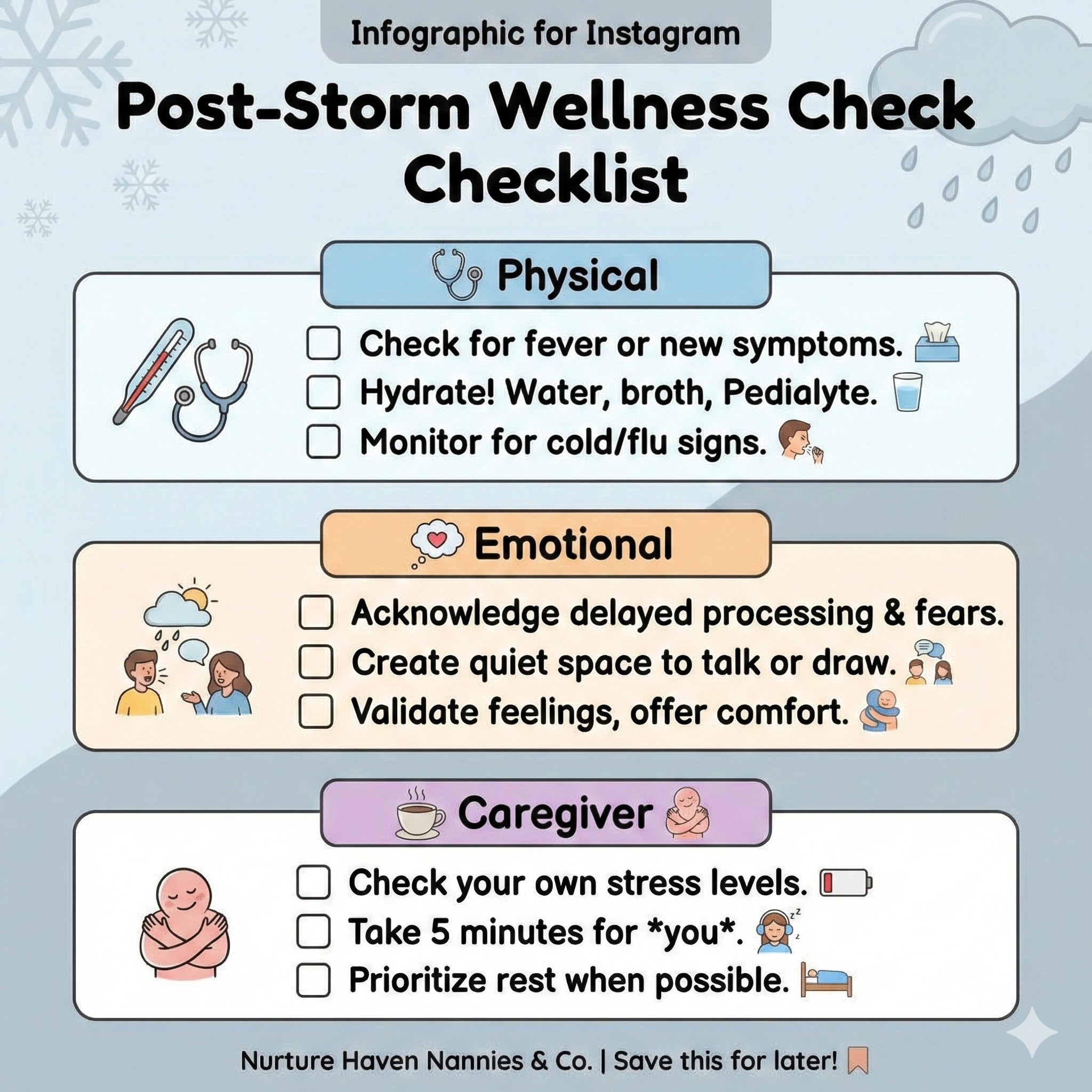
Let's name it: your kids are probably going to be a mess today. Not because you did anything wrong, but because their systems are recovering from a significant disruption.
What you're seeing isn't misbehavior—it's dysregulation. The whining, the meltdowns over small things, the sibling conflicts that escalate faster than usual. These are signs of a nervous system that got knocked off its baseline and hasn't found its way back yet.
Lower your expectations for today. This isn't the day to catch up on everything. It's the day to stabilize. Think of it as clinical recovery—you don't discharge a patient and expect them to run a marathon. You give them time to regulate.
Increase connection, decrease demands. More physical proximity. More "yes" and fewer battles. If they want to sit on your lap while you answer emails, let them. Co-regulation is faster than correction.
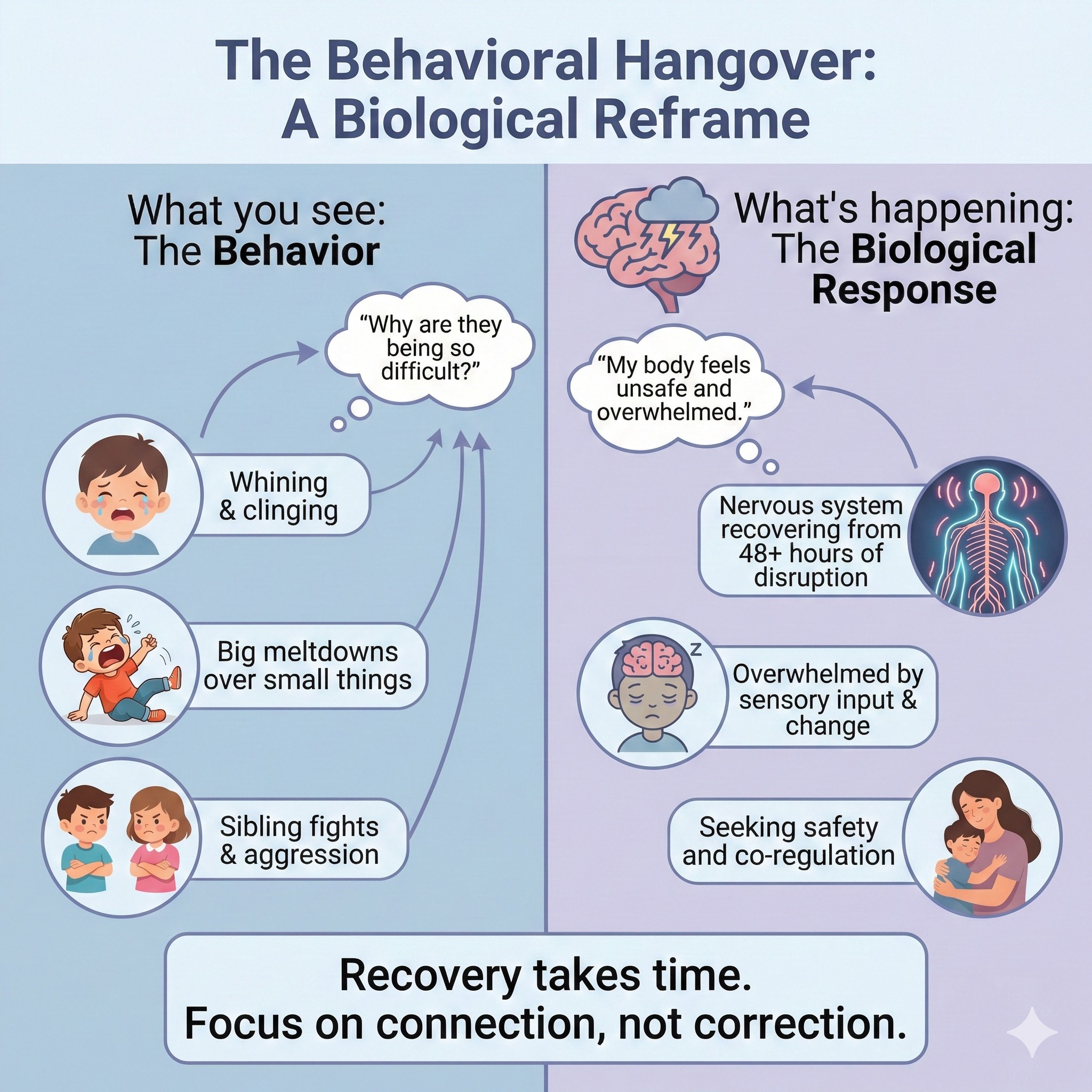
During the storm, routines slipped. That was fine—survival mode has different rules. But today, you gently rebuild.
Meals first. Get back to regular meal times, even if the content is simple. Sitting down together at predictable intervals tells the nervous system that order is returning. Don't worry about nutrition perfection today. Consistency matters more than content.
Sleep is non-negotiable tonight. Whatever time they went to bed during the storm, tonight you return to the normal bedtime. Expect resistance. Hold the line anyway. One solid night of properly-timed sleep will do more for their regulation than anything else.
Naps for the little ones. If your toddler or preschooler skipped naps or napped erratically, prioritize rest today—even if it's quiet time in their room rather than true sleep. Their systems need the downtime.
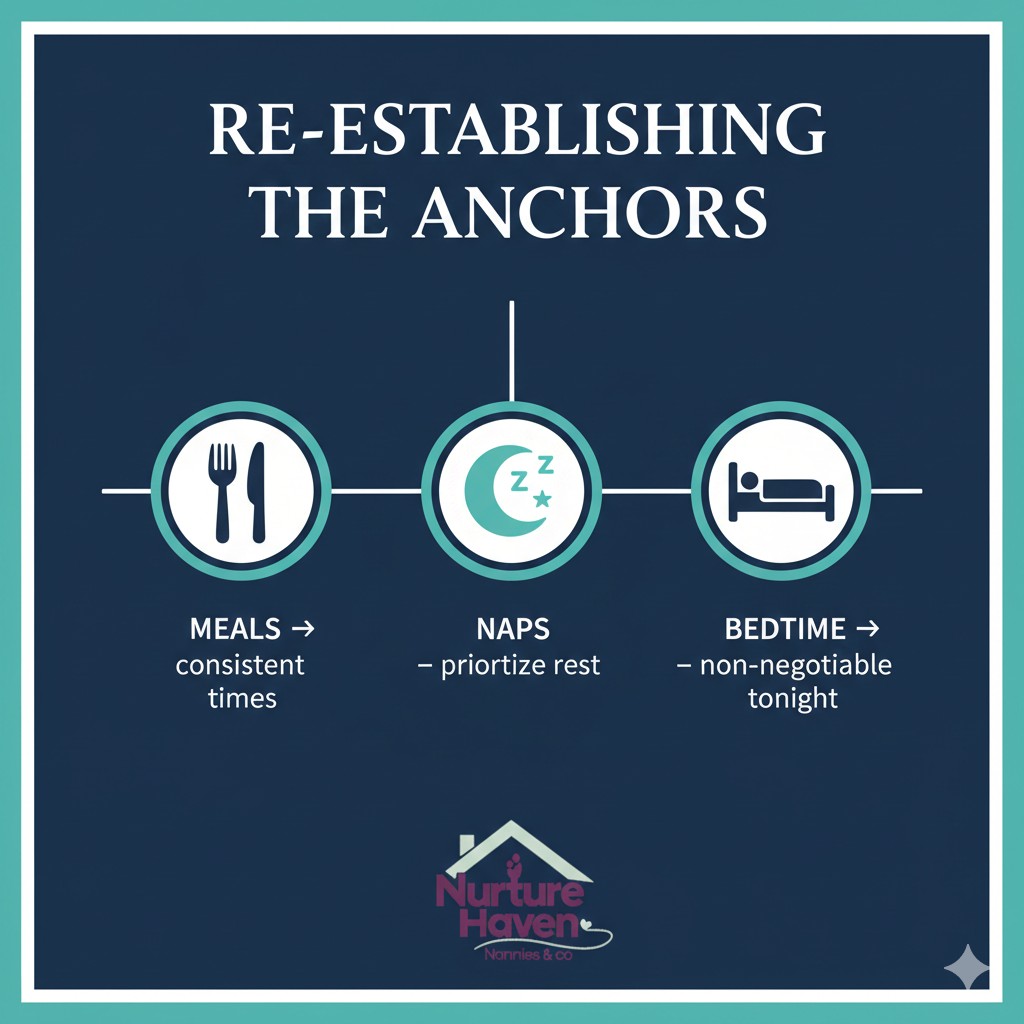
Now that the acute phase has passed, take stock of your household.
Physical inventory. Anyone developing cold or flu symptoms? The stress of disrupted sleep and routine can lower immune defenses. Monitor for fever, watch hydration, and don't ignore early signs. A call to the pediatrician today is better than an urgent care trip Thursday.
Emotional check-in. Some children process stress with a delay. They seem fine during the crisis and fall apart two days later. Create space for them to talk about the storm—what was exciting, what was scary, what they're still thinking about. Drawing or play can help younger children process.
Caregiver check-in. How are you doing? You just managed a household through a significant weather event while probably working, shoveling, and keeping children entertained. Your nervous system took a hit too. Give yourself permission to rest when possible today.
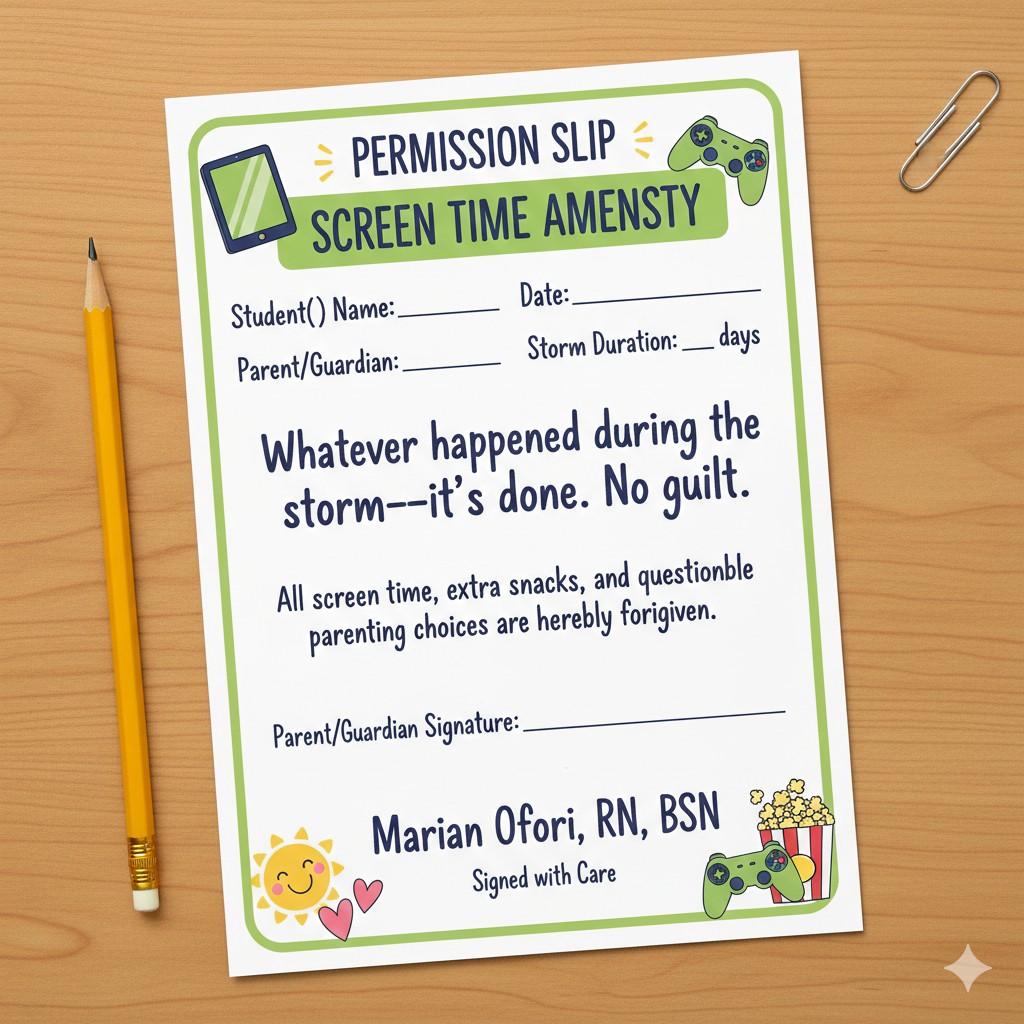
Here's your permission slip: whatever screen time happened during the storm, it's done. No guilt. No "making up for it" with a screen-free week.
The goal now is a gentle return to baseline. Today might still include more screens than usual while you dig out, answer work emails, and recover. That's fine. Tomorrow, you move closer to normal limits. By midweek, you're back to your household's regular boundaries.
Don't announce the transition. Just quietly reduce. Screens off an hour before bed. Activities available as alternatives. Kids adjust faster than we expect when we don't make it a battle.
For some families, the storm isn't over yet. If you're still dealing with outages or heating issues:
Know when to leave. If your home temperature drops below 60°F and you have infants, elderly family members, or anyone with medical vulnerabilities, it's time to find alternative shelter. Pride isn't worth a hypothermia risk.
Continue infant monitoring. Babies can't tell you they're cold. Watch for cool hands and feet, unusual fussiness or lethargy, and difficulty feeding. Skin-to-skin contact under blankets remains one of the most effective warming methods.
Check on neighbors. Especially elderly neighbors who live alone. A quick knock on the door could matter more than you know.
You don't need to catch up today. You need to stabilize.
The emails can wait another few hours. The house can stay messy another day. Your only job right now is to help your household—including yourself—return to baseline.
Triage what matters. Let go of what doesn't.
The snow will melt. The routines will return. Today, you just take the next right step.
We're here if you need us.
— Marian Ofori, RN, BSN
Founder, Nurture Haven Nannies & Co.